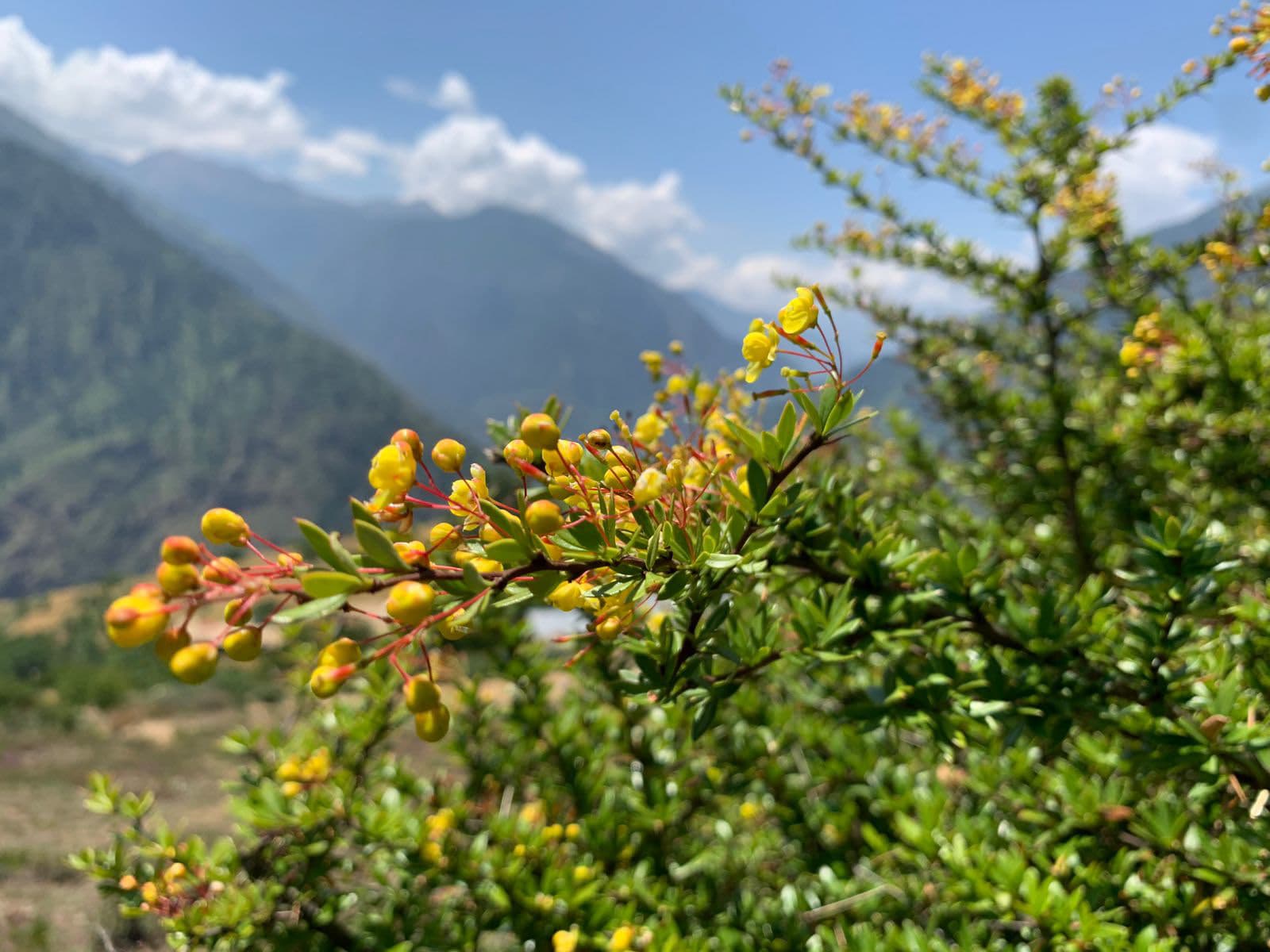
Traditional & Women-Led Beekeeping
Generations of knowledge, empowering communities
Traditional Methods
Beekeeping has been part of life in Humla for generations. Families traditionally make hives from local materials, care for bees according to seasons, and harvest honey carefully without harming bees. Indigenous Himalayan bees produce honey that is collected once a year — raw, unheated, with natural taste and texture.
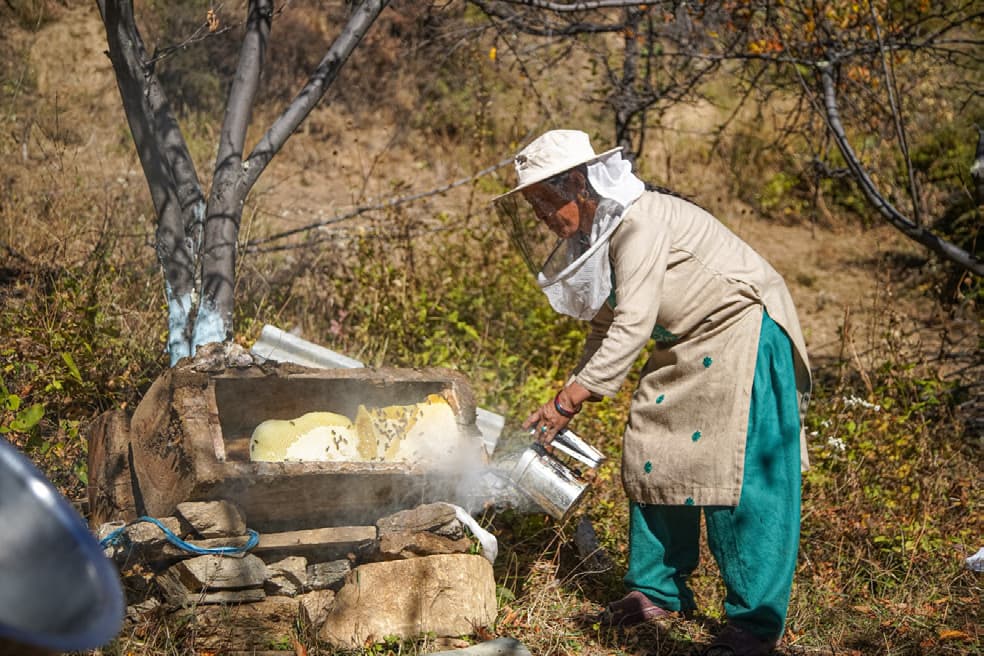
How Honey Is Used Locally
In local households, honey is used:
- •As daily food
- •As traditional medicine
- •For wounds and injuries
- •For livestock health
- •As a gift for guests and ceremonies
Honey is eaten with dhido, buckwheat bread, and saatu.
“Beekeeping has increased women's income, confidence, and role in decision-making.”
Women-Led Beekeeping
With support from local governments and partners such as SGP/GEF/UNDP and Mountain Partnership, women now lead beekeeping activities. Most farmers in Karnali are women, working with small landholdings and traditional knowledge.
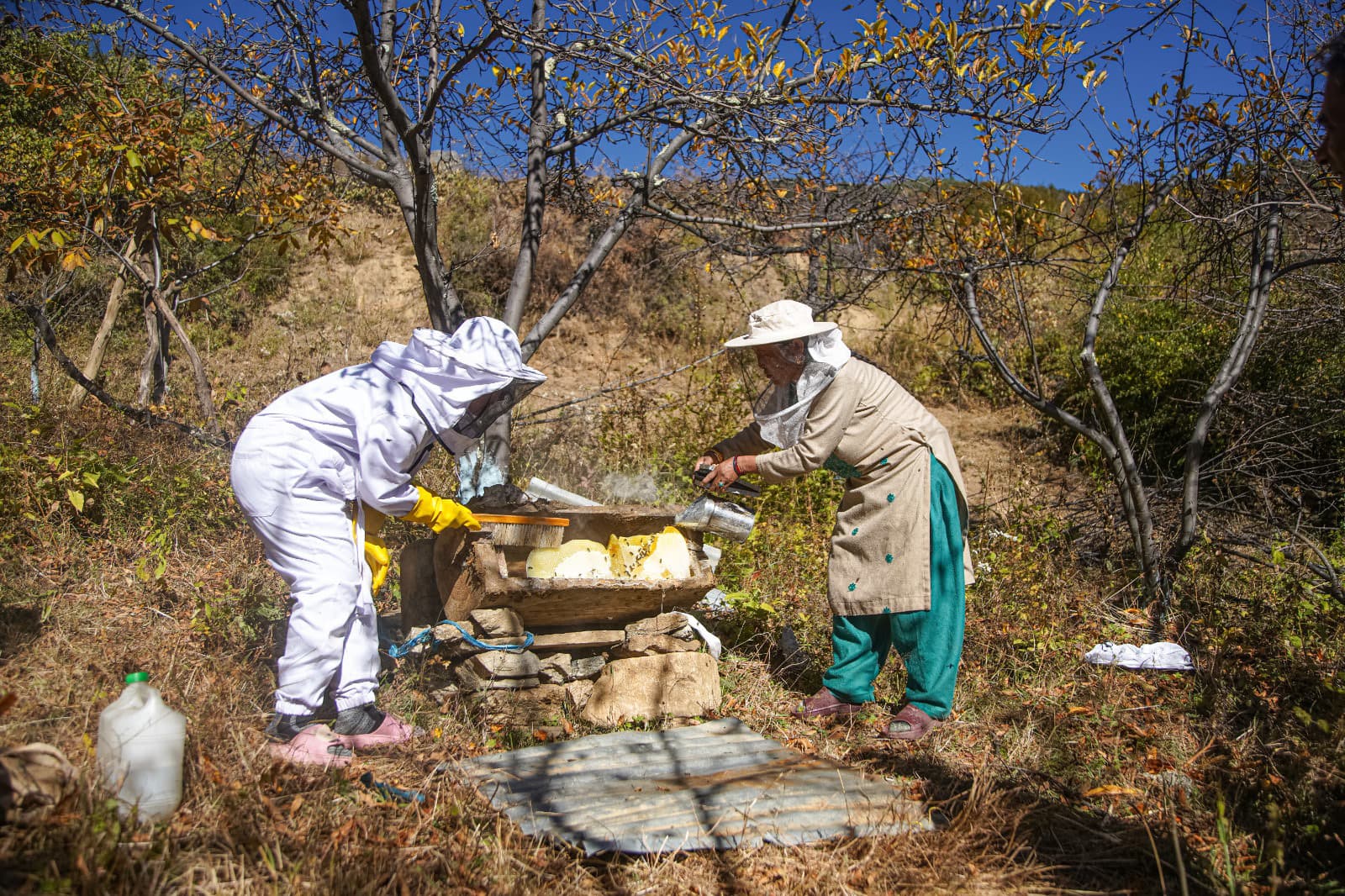
What Women Receive
- ✓Beekeeping training
- ✓High-altitude hives
- ✓Protective clothing
- ✓Honey processing support
Good for Bees, Good for Nature
Beekeeping supports biodiversity. Farmers protect wild flowers and forests, plant buckwheat, mustard, apple, and apricot trees, avoid chemical pesticides, and use traditional herbal treatments for bees. This helps keep bees healthy and land productive.
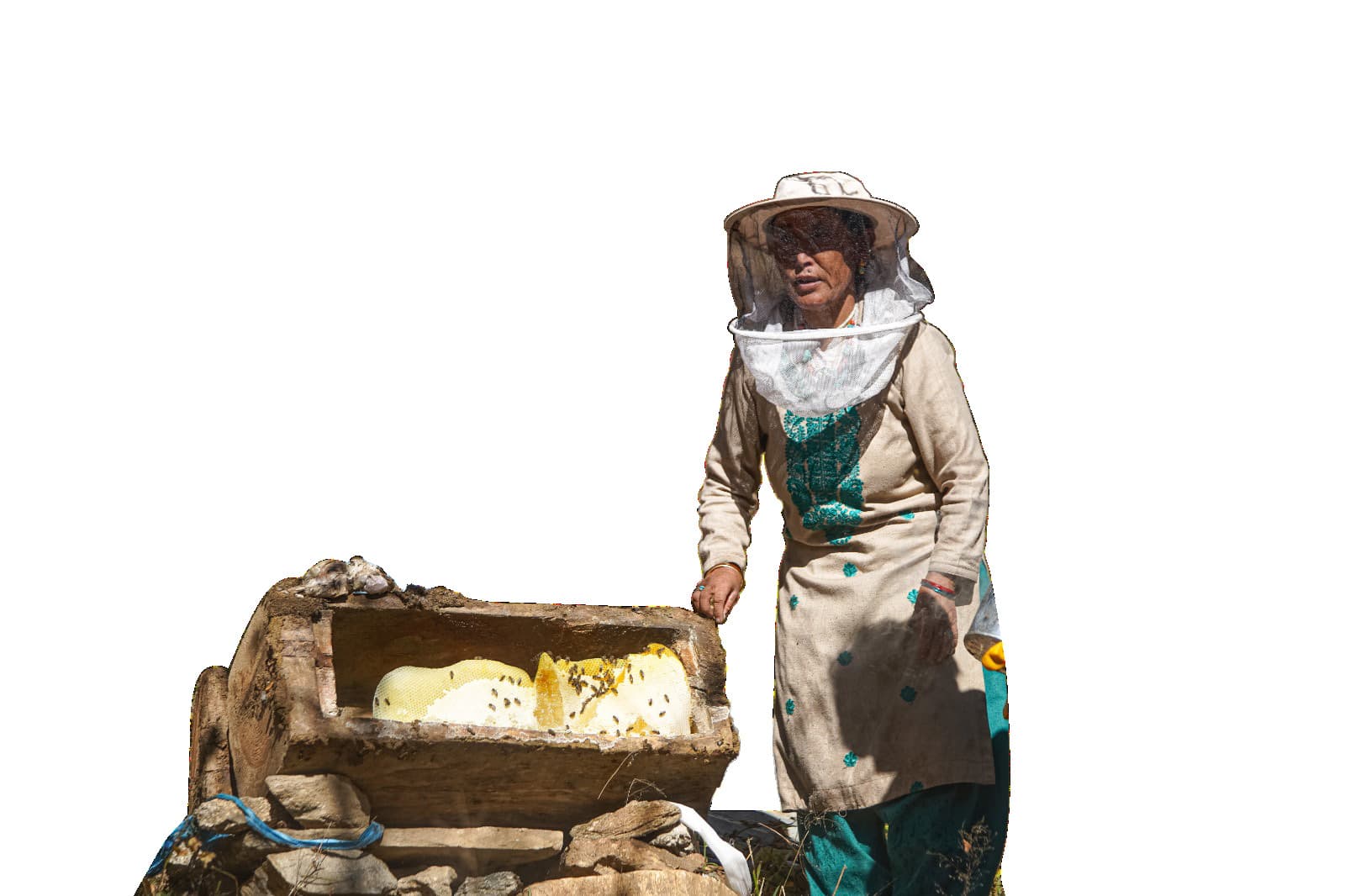
Support Women Beekeepers
Whether as a buyer or partner, you can help empower mountain communities through sustainable beekeeping.
Contact Us